
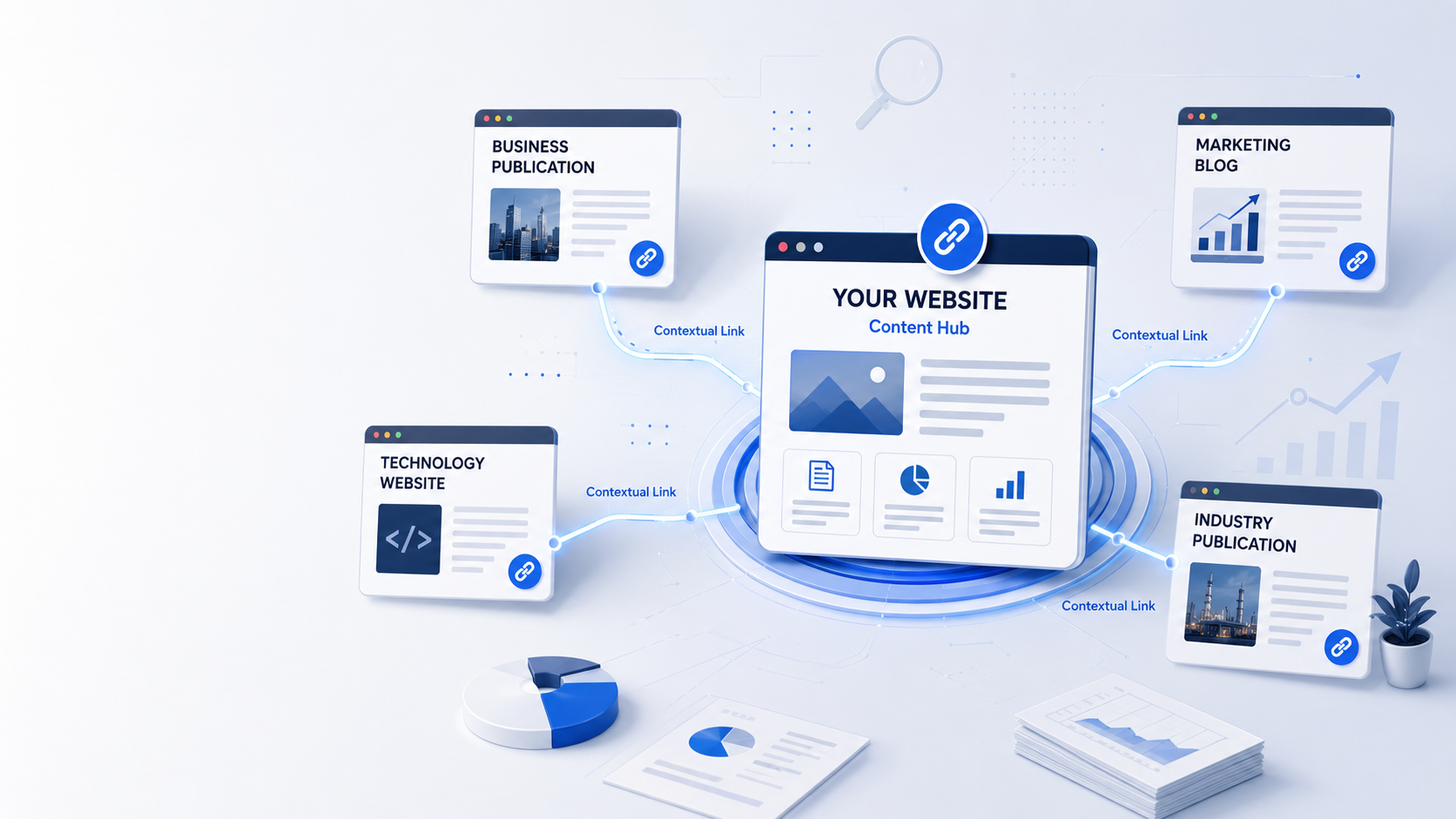
Getting backlinks in 2026 is less about finding hundreds of websites that will link to you and more about giving the right websites a reason to mention your content.
A backlink is simply a link from another website to yours. When a relevant, trustworthy website references your page, it can help people discover your content and can contribute to how search engines understand your site’s authority and relevance.
But the old approach of buying links, submitting your website to hundreds of directories, or sending generic guest-post emails is not a strategy worth building around.
Google explicitly treats manipulative link acquisition as link spam. That includes buying links for ranking purposes, excessive link exchanges, automated link creation, low-quality directories, and other tactics designed primarily to manipulate rankings.
So what should you do instead?
In this guide, we’ll cover 10 practical backlink tactics that can work in 2026, including digital PR, linkable assets, resource-page outreach, broken-link building, unlinked brand mentions, expert contributions, competitor backlink research, and content-driven link building.

What Makes a Backlink Valuable in 2026?
Not every backlink carries the same value.
A useful backlink usually has several characteristics:
- It comes from a website that is relevant to your industry or topic.
- The linking page is useful to its own audience.
- The link is placed naturally within relevant content.
- The referring website has a legitimate audience.
- The link helps readers discover additional information.
- The link was earned rather than created solely to manipulate rankings.
Relevance matters.
For example, a link from a respected marketing publication to an article about SEO is much more contextually useful than a random link from an unrelated website that happens to have a high domain metric.
Google’s documentation also recommends descriptive and relevant anchor text because it helps both users and search engines understand the destination page.
This is why modern link building should start with a better question:
“Why would another website want to reference this page?”
Once you can answer that convincingly, backlink outreach becomes much easier.
1. Create Linkable Assets People Actually Want to Reference
One of the most sustainable ways to earn backlinks is to create something other websites can use as a reference.
A normal 1,500-word article can be useful.
But a useful resource can be much more linkable.
Examples include:
- Original research
- Industry statistics
- Comprehensive guides
- Checklists
- Templates
- Calculators
- Original surveys
- Benchmark reports
- Data visualizations
- Infographics
- Frameworks
- Industry comparisons
- Free tools
For example, instead of publishing another article titled:
“What Is SEO?”
you could create:
“2026 SEO Benchmark Report for Small Businesses“
and include original data, charts, methodology and practical recommendations.
Other marketers can then reference the data when creating their own articles.
Make the asset easy to cite
Include:
- A clear title
- Original data
- Publication date
- Methodology
- Charts
- Definitions
- A short summary
- A suggested citation
- A stable URL
The goal is to make your page the easiest resource to reference.
2. Use Digital PR to Earn High-Quality Mentions
Digital PR combines content, data, storytelling and media outreach.
Instead of asking journalists:
“Can you give me a backlink?”
give them something worth covering.
For example:
- Original research
- Industry survey
- Local business trends
- Consumer behavior data
- Technology trends
- Marketing statistics
- Expert commentary
- Interesting industry findings
Suppose ThirdEssential conducts a survey of 100 businesses about their digital marketing challenges.
You could publish:
“2027 Digital Marketing Challenges: What 100 Businesses Told Us“
Then create a press story around the findings.
Journalists, bloggers and industry publications may reference the research when discussing the subject.
The backlink becomes a by-product of useful information rather than the only objective.
Important distinction
Don’t create fake statistics just to generate PR.
If you don’t have original data, use:
- Expert commentary
- Original analysis
- Case studies
- Industry observations
- Curated research with proper attribution
Trust matters more than having impressive-looking numbers.
3. Find Broken Links and Offer a Better Replacement
Broken-link building is an old tactic, but it can still work when done intelligently.
The basic process is:
Find broken resource → Create/identify a useful replacement → Contact website owner → Suggest your page
For example, imagine a marketing website has an old article about:
“SEO Link Building Techniques“
and one of its references now returns a 404 error.
If ThirdEssential has a genuinely useful article covering that subject, you can contact the website owner and explain the problem.
Your message should focus on helping them fix their page.
Not:
“Please give me a backlink.”
Instead:
“I noticed one of the resources referenced in your article is no longer available. I thought you might want to replace it with this updated resource.”
The website owner can then decide whether your resource is appropriate.
4. Turn Unlinked Brand Mentions Into Backlinks
Sometimes websites already mention your company but don’t link to you.
This is one of the easiest backlink opportunities because the website has already decided that your brand is worth mentioning.
Search for mentions of:
- ThirdEssential
- ThirdEssential IT Solutions
- ThirdEssential Digital Marketing
- Company founders or experts
- Original research
- Company projects
- Published resources
Then check whether the mention includes a link.
If it doesn’t, contact the publisher.
Keep the request simple:
“Thanks for mentioning ThirdEssential in your article. If useful for your readers, you could also link the company name to our website so readers can find the referenced resource directly.”
Don’t demand the link.
Make it a usability suggestion.
5. Build Resource-Page Links
Many websites maintain resource pages containing useful tools, guides, agencies, organizations or educational materials.
For example:
“Best SEO Resources for Small Businesses“
or:
“Digital Marketing Resources for Startups”
or:
“SEO Tools and Guides for Local Businesses”
These pages can be excellent backlink opportunities when your resource genuinely belongs there.
The important part is relevance.
Don’t submit your website to every directory or resource page you can find.
Google specifically identifies low-quality directories and bookmark sites used primarily for manipulating rankings as link spam.
Instead, target curated pages that:
- Have a real audience
- Are maintained
- Are topically relevant
- Actually review resources
- Provide useful information
6. Publish Expert Contributions and Earn Editorial Links
Another effective approach is becoming a useful source for other publishers.
You can contribute:
- Expert quotes
- Interviews
- Industry commentary
- Case studies
- Expert roundups
- Podcast interviews
- Webinars
- Industry panels
- Research collaborations
For example, if a publication is writing about:
“SEO Trends for Small Businesses in 2026“
and needs expert opinions, a ThirdEssential SEO professional can contribute a useful insight.
The resulting article may include an author/company reference.
The important part is that the contribution must provide genuine expertise.
Don’t produce dozens of low-quality guest posts solely to insert keyword-rich backlinks.
Google specifically warns against manipulative links in paid or optimized guest posts and similar content created primarily for ranking purposes.
7. Use Competitor Backlink Analysis to Find Opportunities
Your competitors have already done some of the prospecting work for you.
Analyze websites that link to competitors and ask:
Why did they link?
You may discover links coming from:
- Industry publications
- Business directories
- Resource pages
- Local organizations
- Partner websites
- Interviews
- Guest contributions
- Statistics pages
- Reviews
- Industry lists
- Case studies
Don’t copy the competitor’s backlink profile blindly.
Instead, identify the reason behind the link.
For example:
Competitor has a backlink from:
“Top Digital Marketing Agencies in India“
You can investigate:
- Why was the competitor included?
- Is the page still accepting companies?
- Is ThirdEssential relevant?
- Can you provide something more useful?
- Is there a legitimate editorial opportunity?
This turns backlink analysis into opportunity research rather than a numbers game.
8. Create Statistics, Studies and Original Data
Data is naturally linkable.
If you can publish information that other writers need to reference, you create a reason for backlinks.
Potential ThirdEssential research topics could include:
Example 1
“Digital Marketing Adoption Among Small Businesses in Indore — 2026 Survey”
Example 2
“SEO Challenges Faced by Local Businesses in India — 2026”
Example 3
“Website Conversion Benchmarks for Small Businesses”
Example 4
“Google Ads vs SEO: Lead Generation Trends for Small Businesses”
The important part is to document the methodology.
Include:
- Sample size
- Survey period
- Data collection method
- Industry breakdown
- Limitations
- Findings
- Charts
- Methodology
This makes the research much more trustworthy.
It can also become a linkable asset that supports your wider content cluster.
9. Reclaim Lost or Broken Backlinks
Backlinks can disappear.
A website may:
- Delete the linking page
- Change its URL
- Remove the link
- Replace the resource
- Redirect the page
- Update an article
Instead of constantly chasing new backlinks, periodically check existing ones.
For each lost backlink, determine:
Was the referring page removed?
If yes, there may be nothing to recover.
Was your destination URL changed?
Redirect the old URL appropriately.
Was the link accidentally removed?
Contact the publisher.
Is there now a better destination?
Suggest the most relevant current page.
This is often overlooked because marketers focus almost entirely on acquiring new links.
But recovering a legitimate lost mention can be easier than earning a completely new one.
10. Build Partnerships That Naturally Generate Mentions
Some of the best backlinks come from relationships rather than cold outreach.
Consider legitimate relationships with:
- Technology partners
- Clients
- Vendors
- Industry associations
- Local business communities
- Chambers of commerce
- Startup communities
- Universities
- Event organizers
- Conferences
- Podcasts
- Industry publications
For example, if ThirdEssential participates in a legitimate technology event, the event organizer may naturally mention the company on its speaker, sponsor or participant page.
Likewise, a genuine client case study can result in a company being referenced by the client.
The important word is genuine.
Don’t create artificial partner pages solely to exchange links.
Google specifically warns against excessive link exchanges and partnerships created primarily for cross-linking.
What About Guest Posting in 2026?
Guest posting isn’t automatically bad.
The problem is using guest posts primarily as a backlink-generation system.
A useful guest contribution should:
- Be published on a relevant website
- Have a real audience
- Provide original information
- Fit the publication’s editorial standards
- Be useful even without the backlink
For example:
Good:
You contribute a detailed article about technical SEO to a respected web-development publication because you have genuine expertise.
Weak:
You publish 50 generic articles across unrelated websites with exact-match anchors pointing to your SEO service page.
The second approach is much closer to link manipulation.
How to Choose Which Backlinks to Pursue
Don’t evaluate opportunities using only Domain Authority or Domain Rating.
Look at the complete picture.
| Factor | What to Look For |
| Relevance | Is the website related to your topic? |
| Audience | Does it have real readers? |
| Editorial quality | Does the site publish useful content? |
| Context | Would your link genuinely help readers? |
| Placement | Is the link naturally placed? |
| Trust | Does the website appear legitimate? |
| Traffic | Does the page/site attract visitors? |
| Sustainability | Is the link likely to remain useful? |
A relevant editorial backlink from a smaller but respected industry website can be more meaningful than a random link from a large site with no topical connection.
How to Build Backlinks Without Creating Spam
A sustainable backlink strategy should follow this sequence:
Create something valuable
↓
Make it discoverable
↓
Identify websites that would genuinely benefit from it
↓
Reach out with context
↓
Earn the mention
↓
Build relationships
↓
Create more useful assets
This is fundamentally different from:
Buy links → automate outreach → create hundreds of pages → repeat
Google’s current spam policies explicitly prohibit link schemes designed primarily to manipulate rankings, including buying links, excessive link exchanges, automated link creation and low-quality directory links.
How Internal Linking Supports Your Backlink Strategy
Backlinks are only part of the picture.
Once another website links to one of your pages, you should make sure that page connects naturally to other important pages on your website.
For example:
External backlink
↓
SEO guide
↓
Internal link to SEO services
↓
Technical SEO article
↓
SEO audit
↓
Contact
This helps users discover more useful information and creates stronger relationships between related pages.
ThirdEssential’s existing content already provides opportunities for this type of topic cluster. Its current SEO content covers areas such as SEO trends, technical SEO, internal linking, local SEO, content quality and SEO audits.
For example, readers interested in backlink acquisition can also explore the existing article on [SEO mistakes] and its discussion of internal linking and authority building. SEO mistakes costing your website traffic
If they need a broader digital growth strategy, the [digital marketing services] page is the natural commercial next step. digital marketing services

ThirdEssential Backlink Strategy: What I’d Prioritize
For ThirdEssential specifically, I would prioritize these tactics:
Priority 1 — Original research
Create data-driven marketing and SEO reports that other websites can cite.
Priority 2 — Linkable SEO resources
Build comprehensive guides, checklists and visual resources around SEO.
Priority 3 — Digital PR
Pitch original insights and data to relevant marketing and technology publications.
Priority 4 — Competitor backlink gap
Analyze competitors and identify legitimate editorial opportunities.
Priority 5 — Unlinked mentions
Find existing ThirdEssential mentions and request relevant links.
Priority 6 — Expert contributions
Build relationships with marketing, technology and business publications.
Priority 7 — Local authority
Look for legitimate Indore business organizations, technology communities, events and industry publications.
Priority 8 — Content promotion
Promote useful content through communities and relevant channels rather than waiting for Google to discover it.
ThirdEssential already has a substantial content base across digital marketing and content marketing, including articles on content promotion, content marketing strategy, SEO, local SEO and digital marketing.
That means the opportunity isn’t necessarily to publish hundreds of new articles.
It’s to turn the strongest existing content into resources worth referencing.
A Simple 30-Day Backlink Workflow
Week 1 — Research
Identify:
- 20 competitor backlinks
- 20 relevant publications
- 10 resource pages
- 10 broken-link opportunities
- 10 unlinked brand mentions
- 10 expert contribution opportunities
Create a prospect spreadsheet.
Week 2 — Build Assets
Choose one major linkable asset.
For example:
“The 2026 Small Business SEO Checklist”
Create:
- Long-form guide
- Original checklist
- Infographic
- Downloadable PDF
- Supporting blog content
Then connect the asset to relevant ThirdEssential pages.
Week 3 — Outreach
Contact relevant websites individually.
Personalize:
- Website
- Article
- Reason for relevance
- Specific resource
- Suggested context
Avoid mass-generated outreach.
Week 4 — Promotion & Reclamation
Work on:
- Unlinked mentions
- Lost backlinks
- Broken links
- Existing relationships
- Industry communities
- Expert opportunities
- Content promotion
Track:
- Prospects contacted
- Responses
- Links earned
- Referring domains
- Link relevance
- Target pages
- Anchor text
- Traffic generated
Backlink Outreach Checklist
Before asking for a link, ask:
- Is this website genuinely relevant?
- Does it have a real audience?
- Is the target page useful?
- Does the proposed link improve the article?
- Is my outreach personalized?
- Am I offering something useful?
- Am I avoiding manipulative anchor text?
- Am I avoiding link exchanges?
- Am I avoiding paid ranking links?
- Would I still want this relationship if the link had no SEO value?
If the answer to the last question is yes, you’re usually thinking about link building the right way.
Common Backlink Mistakes to Avoid
Buying links for rankings
Paid advertising and sponsorship are normal business activities, but paid links intended to manipulate ranking signals must be appropriately qualified. Google recommends rel=”sponsored” for paid placements and supports nofollow in appropriate cases.
Using hundreds of directories
More referring domains doesn’t automatically mean better SEO.
Avoid low-quality directory networks created primarily for links.
Exact-match anchor overuse
Don’t try to make every external link say:
“best SEO company in Indore”
Natural anchors are usually more appropriate.
Automated link building
Automation can quickly create a large quantity of low-quality links, but quantity is not a substitute for relevance.
Excessive link exchanges
“Link to us and we’ll link to you” shouldn’t become your backlink strategy.
Creating content only for links
If the article wouldn’t be useful without the backlink, rethink the content.
Google’s spam policies specifically call out link exchanges, automated link creation, low-quality directories and low-value content created primarily to manipulate links.
Frequently Asked Questions
How many backlinks do I need to rank in 2026?
There is no universal number.
The required authority depends on the query, competition, relevance, content quality, website strength and many other factors. Focus on earning relevant links rather than hitting an arbitrary backlink count.
Are backlinks still important in 2026?
Yes, links remain useful for discovery and as part of how Google understands relationships between pages and websites. But backlinks are only one part of SEO. Google also emphasizes helpful, reliable, people-first content and strong technical fundamentals.
Are paid backlinks safe?
Buying links specifically to manipulate search rankings can violate Google’s spam policies. Paid or sponsored links should be properly qualified using attributes such as rel=”sponsored” or, where appropriate, nofollow.
Is guest posting still useful?
It can be useful when the contribution is genuinely valuable and editorially appropriate. It should not become a scaled system for generating keyword-rich backlinks.
What is the fastest way to get backlinks?
There is no universally fastest legitimate method. Existing unlinked brand mentions, relevant broken-link opportunities, expert contributions and relationships can sometimes produce results faster than building a new resource from scratch.
Should every backlink point to my homepage?
No.
Deep links to relevant articles, resources and service pages can be more useful when the destination directly supports the referring content.
Final Takeaway
The best backlink strategy in 2026 isn’t about collecting the largest possible number of links.
It’s about becoming easy to reference.
Create research people need.
Create guides people can cite.
Publish original data.
Build relationships with relevant publishers.
Recover legitimate mentions.
Contribute useful expertise.
Find broken resources and offer better replacements.
And most importantly, create content that deserves to be linked to in the first place.
For ThirdEssential, the opportunity is particularly strong because the website already has content across SEO, content marketing, digital marketing, local SEO, technical SEO and website development.
A backlink should then become the beginning of the user’s journey, not the end:
External mention → useful ThirdEssential resource → related SEO content → relevant service → enquiry
If you want to turn backlink acquisition into a sustainable SEO channel, the next step is to combine linkable content + targeted outreach + strong internal linking + technical SEO.
ThirdEssential’s services page already positions its backlink strategy alongside SEO optimization and technical SEO support, making it a natural commercial destination for readers who want help implementing this process.
Explore ThirdEssential’s backlink strategy and digital marketing services