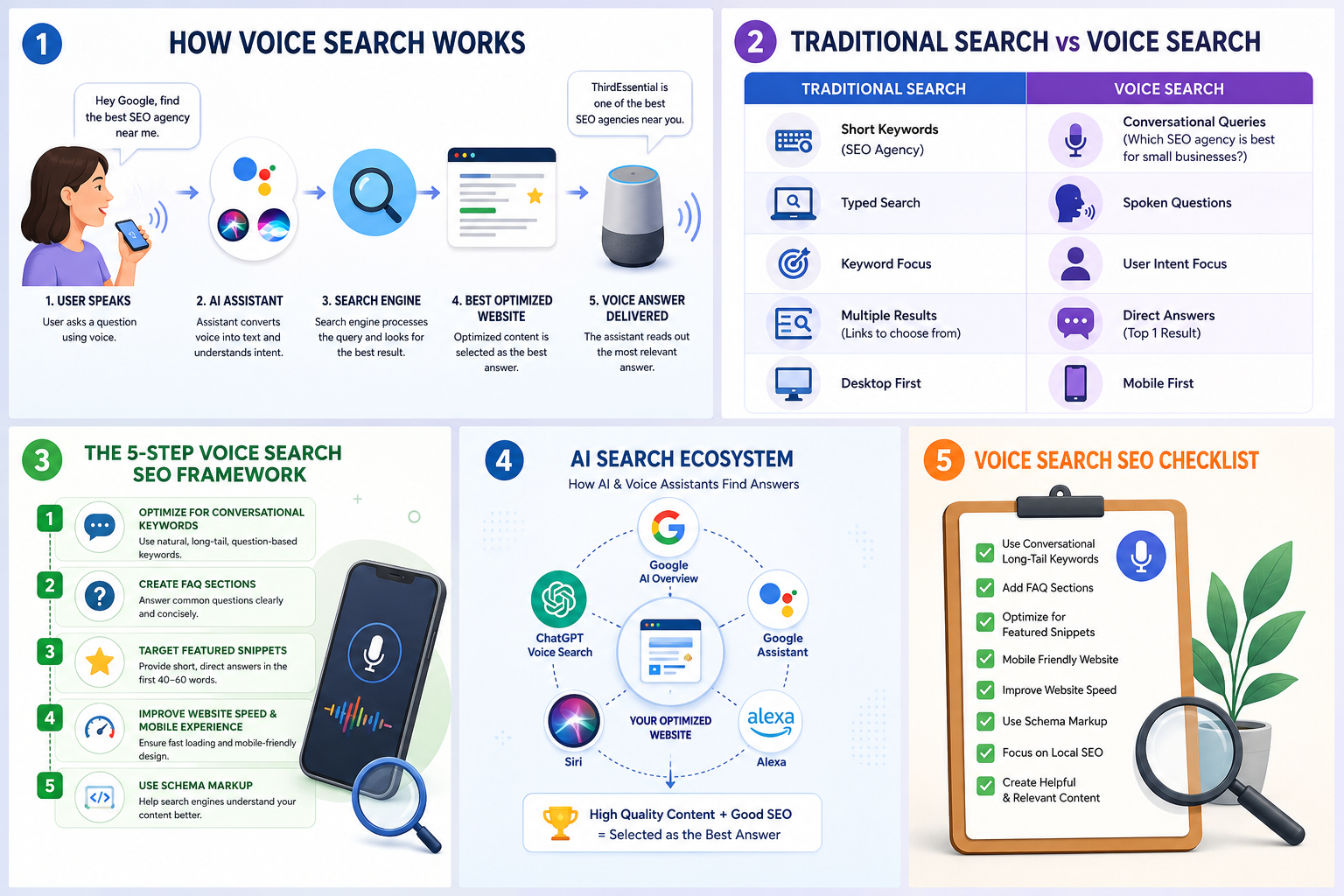

So much has changed in the world of search engine optimization (SEO) since the days when blogs and backlinks were the only way to rank higher. In SEO Trends To succeed in the 2027 landscape of online search, it is essential to develop content that is valuable, trustworthy, and user-centric, which can thrive in traditional search engines and in AI-driven search experiences such as Google AI Overviews, ChatGPT, Gemini, and Perplexity.
Today, Google’s algorithms are driven to reward content that showcases expertise, meets search intent, and offers a smooth user experience. Companies who are still using the old methods of SEO struggle to maintain their rankings and those who are following the new methods of SEO are still gaining more and more organic traffic and leads.
From businesses, marketers to SEO professionals, this guide sheds light on the upcoming trends and search developments that are set to define SEO in 2027 and offers actionable insights to boost your website’s ranking, visibility, and future success.
Table of Contents
Why SEO Is Different in 2027
Search Intent Is More Important Than Keywords
AI Search & Generative Engine Optimization (GEO)
Build Topical Authority
Create Helpful, Experience-Based Content
EEAT Builds Trust
Technical SEO Still Matters
Core Web Vitals & User Experience
Optimize for AI Overviews
Internal Linking Strategy
Structured Data & Schema
Refresh Existing Content
Local SEO Continues to Grow
Measure SEO Performance
Future-Proof Your SEO Strategy
Why SEO Is Different in 2027
Modern SEO is no longer about manipulating algorithms—it’s about delivering the best possible answer to a user’s question.
Today’s search engines evaluate:
- Search intent
- Content quality
- Experience and expertise
- Website performance
- User engagement
- Brand authority
- Technical health
- Structured data
Instead of optimizing individual pages around a single keyword, successful businesses build comprehensive topic clusters that demonstrate authority across an entire subject.
1. Search Intent Is More Important Than Keywords
Keywords still help search engines understand your content, but intent determines whether your page satisfies users.
Ask yourself:
- What problem is the visitor trying to solve?
- What information do they expect?
- What action should they take next?
For example, someone searching “SEO Trends 2027” isn’t looking for a definition of SEO. They want actionable insights that can improve rankings in today’s search landscape.
Expert Tip
Before writing any page, analyze the top-ranking results. Identify what questions they answer and then create content that’s more comprehensive, practical, and up to date.
2. AI Search Is Reshaping SEO
AI has revolutionized the way users find information.
Consumers are seeking conversational answers from Google AI Overviews, ChatGPT, Gemini and Perplexity more and more. These systems look for content that is:
- Accurate
- Well-structured
- Easy to understand
- Supported by credible sources
- Updated regularly
This has given rise to Generative Engine Optimization (GEO)—the practice of optimizing content for AI-powered search engines.
How to Optimize for AI Search
- Answer questions clearly.
- Use descriptive headings.
- Include definitions and summaries.
- Add FAQs.
- Cite reputable sources.
- Keep content updated.
- Use schema markup.
Businesses that optimize for both traditional search and AI search gain greater visibility across multiple discovery platforms.
3. Build Topical Authority Instead of Publishing Random Blogs
Google rewards websites that demonstrate deep expertise.
Instead of writing isolated articles, create a content cluster.
Example:
SEO
- Technical SEO
- Local SEO
- Keyword Research
- Content Marketing
- SEO Audits
- Link Building
- AI Search Optimization
- Core Web Vitals
- Schema Markup
Link these articles together naturally. This helps users navigate related topics and signals expertise to search engines.
4. Create Helpful Content That Demonstrates Real Experience
The most successful content provides genuine value—not just information.
Include:
- Practical examples
- Real scenarios
- Step-by-step processes
- Checklists
- Common mistakes
- Actionable recommendations
Instead of saying “improve website speed,” explain how to improve it using image optimization, browser caching, code minification, and lazy loading.
Helpful content builds trust and encourages users to spend more time on your website.
5. EEAT Continues to Influence Rankings
Google values content that demonstrates:
- Experience
- Expertise
- Authoritativeness
- Trustworthiness
Improve EEAT by:
- Publishing author information
- Updating content regularly
- Sharing original insights
- Referencing trusted sources
- Including real business examples
- Displaying certifications or awards where applicable
Trust is one of the strongest long-term ranking signals.
6. Technical SEO Remains Essential
Excellent content won’t perform well if search engines struggle to crawl or understand your website.
Regularly audit:
- Crawl errors
- XML sitemaps
- Robots.txt
- HTTPS
- Broken links
- Redirect chains
- Mobile usability
- Structured data
A technically healthy website supports better indexing, user experience, and long-term rankings.
Technical SEO Checklist
- Fast loading pages
- Secure HTTPS
- Mobile-friendly design
- Optimized images
- Clean URLs
- Valid schema markup
- Updated XML sitemap
- No broken links
7. Core Web Vitals & User Experience Matter
User experience remains a major ranking factor.
Focus on improving:
- Largest Contentful Paint (LCP)
- Interaction to Next Paint (INP)
- Cumulative Layout Shift (CLS)
Simple improvements include:
- Compressing images
- Removing unused JavaScript
- Lazy loading media
- Using browser caching
- Choosing reliable hosting
A faster website not only ranks better but also improves conversions.
8. Internal Linking Builds Authority
Internal links help users discover related content while distributing authority across your website.
For example, this article can naturally link to:
- SEO Audit Guide
- Technical SEO Services
- Content Marketing
- Website Design
- Digital Marketing Services
- AI Marketing
- Contact Page
Use descriptive anchor text instead of generic phrases like “click here.”
9. Optimize for Google AI Overviews
AI-generated answers are becoming increasingly visible in search results.
Increase your chances of appearing by:
- Answering questions directly
- Using bullet points
- Including numbered lists
- Writing concise summaries
- Adding FAQ sections
- Implementing schema markup
The easier your content is to understand, the easier it is for AI systems to reference it.
10. Structured Data Improves Visibility
Schema markup helps search engines understand your content.
Recommended schema:
- Article Schema
- FAQ Schema
- Breadcrumb Schema
- Organization Schema
- Local Business Schema
Structured data can increase your chances of earning rich results and improve click-through rates.
11. Refresh Existing Content
SEO is not a one-time task.
Update important pages every 6–12 months by:
- Refreshing statistics
- Adding new trends
- Improving examples
- Expanding sections
- Removing outdated advice
Fresh content signals that your website remains relevant.
12. Diversify Your Content
Support written content with:
- Infographics
- Videos
- Comparison tables
- Screenshots
- Checklists
- Process diagrams
Visual content improves engagement and encourages visitors to stay on your site longer.
13. Local SEO Still Delivers Results
Businesses serving local markets should optimize:
- Google Business Profile
- Location pages
- Customer reviews
- Local citations
- Consistent business information
Combining local SEO with strong website content improves both visibility and trust.
14. Measure What Matters
Instead of focusing only on rankings, monitor:
- Organic traffic
- Click-through rate
- Qualified leads
- Conversion rate
- User engagement
- Returning visitors
- Keyword growth
Regular reporting helps identify opportunities and improve future SEO strategies.
15. Future-Proof Your SEO Strategy
Search is a constantly changing industry, but there’s one thing that’s held constant: make great content that helps people.
Organic traffic will keep flowing to websites that cater to search intent, technical optimization, topical expertise, and user experience.
Don’t follow every algorithm change, create a website that will always add value.
Quick SEO Checklist
✔ Understand search intent
✔ Create comprehensive content
✔ Build topical authority
✔ Improve Core Web Vitals
✔ Optimize for AI Search
✔ Add structured data
✔ Strengthen internal linking
✔ Refresh content regularly
✔ Track performance in Google Search Console
✔ Focus on user experience
Frequently Asked Questions
Is SEO still worth investing in?
Yes. SEO remains one of the highest ROI digital marketing strategies because it attracts users actively searching for your products or services.
What is Generative Engine Optimization (GEO)?
GEO is the practice of optimizing content so it can be understood, cited, and surfaced by AI-powered search platforms such as Google AI Overviews, ChatGPT, Gemini, and Perplexity.
How often should SEO content be updated?
High-value pages should be reviewed every six to twelve months to keep information accurate and competitive.
Does AI replace SEO?
No. AI changes how content is discovered, but high-quality, trustworthy, and well-structured content remains essential.
What’s the biggest SEO trend in 2027?
Optimizing for both traditional search engines and AI-powered search experiences while focusing on search intent, EEAT, technical SEO, and topical authority.
Conclusion
In 2027, SEO is all about trust, expertise, and providing value to users. By focusing on search intent, AI-ready optimization, technical SEO, and topical authority, businesses can better position themselves for sustainable rankings and long-term growth success.
Rather than ‘fishing’, invest in resources that actually help people, that solve problems, and that give them a great experience. Search is a constantly changing landscape, and those sites that focus on quality, credibility and ongoing enhancement will continue to stay ahead of the curve.
When you’re ready to strengthen your SEO strategy, increase organic visibility, and prepare your website for the future of search, partnering with an experienced digital marketing agency can make all the difference. At Third Essential, we help businesses improve their search rankings, drive qualified organic traffic, and achieve sustainable long-term growth through data-driven SEO strategies. Whether you’re looking to optimize your existing website or build a future-ready SEO plan, our team is here to help. Contact us today to discover how we can improve your rankings and grow your business online.